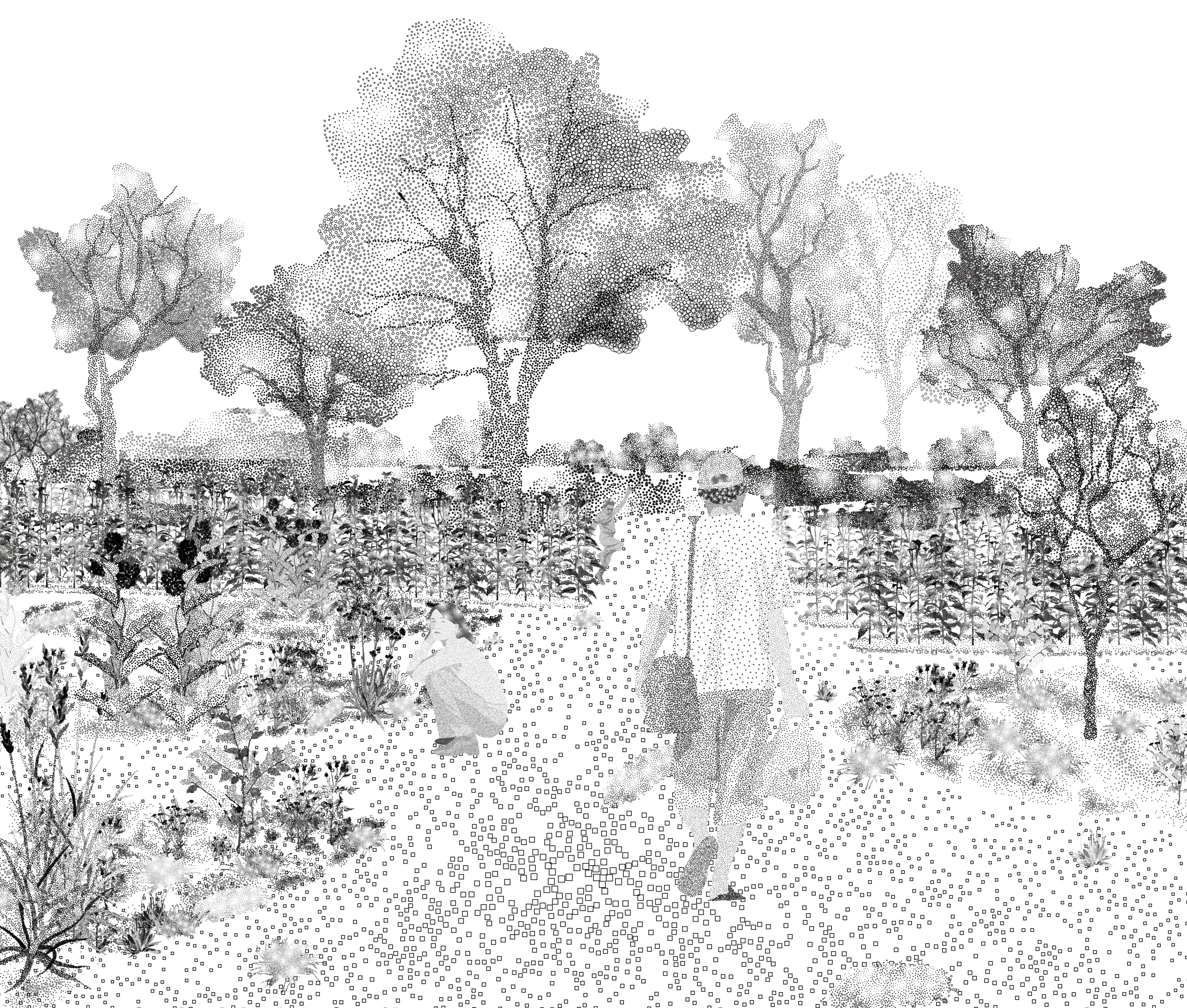
This project explores the creation of a new kind of sacred natural site (SNS), generally defined as a landscape that has “special spiritual significance to peoples and communities,” with the intention to conserve and repair the soil. This project seeks to cultivate a landscape where the human and the wild, the cultural and the natural, and the immanent and transcendence meet, integrating ritual as an integral design feature, in company with earthworks. The site rests between two cemeteries, Green Lawn and Mt. Calvary, in the heart of Columbus, cornered by freeways and sitting next to an abandoned baseball stadium. Though the landscape is typical of forgotten urban infrastructure, a banal yet strange mix of cracked concrete and random, sparse vegetation dotting the asphalt, the site is far from inactive, known and used frequently by the local community as a go-between for daily errands and routine trips. I am concerned by and interested in the field’s reification of the distinctions and separations between “the human” and the natural world, and I used the design as a sort of rebuttal. Ruderal plants that we see as a “nuisance” and “undesirable” are actually already an unintended garden that we have created, born out of harsh conditions imparted to them from anthropogenic disturbance. These plants create ecological openings for other native plants to establish themselves by remediating contaminants from the soil and forming more complex site conditions. The intent was to preserve a functional and novel public space without “building” it, leaving the lot open, wild, and undeveloped to highlight he “inaccuracy of associating an abandoned site with a space that is degraded or degrading” (Lois Weinberger). The larger goal with the significance of ruderal plants in the design is to impart a greater understanding to the local community of the importance and value of this kind of plant life. In the act of walking by these plants, and even just by having ruderal vegetation take up so much space in a “designed” project, a generative connection is formed that allows a greater appreciation of their beauty and import. Over time, the dissolution between the two, I hope, would instill a sense of stewardship in those who once merely passed through the site, but now have imposed their own agency, maybe by adding a few more steps to their daily walk, even leading to a care of this place akin to grave tending.